Skip to content
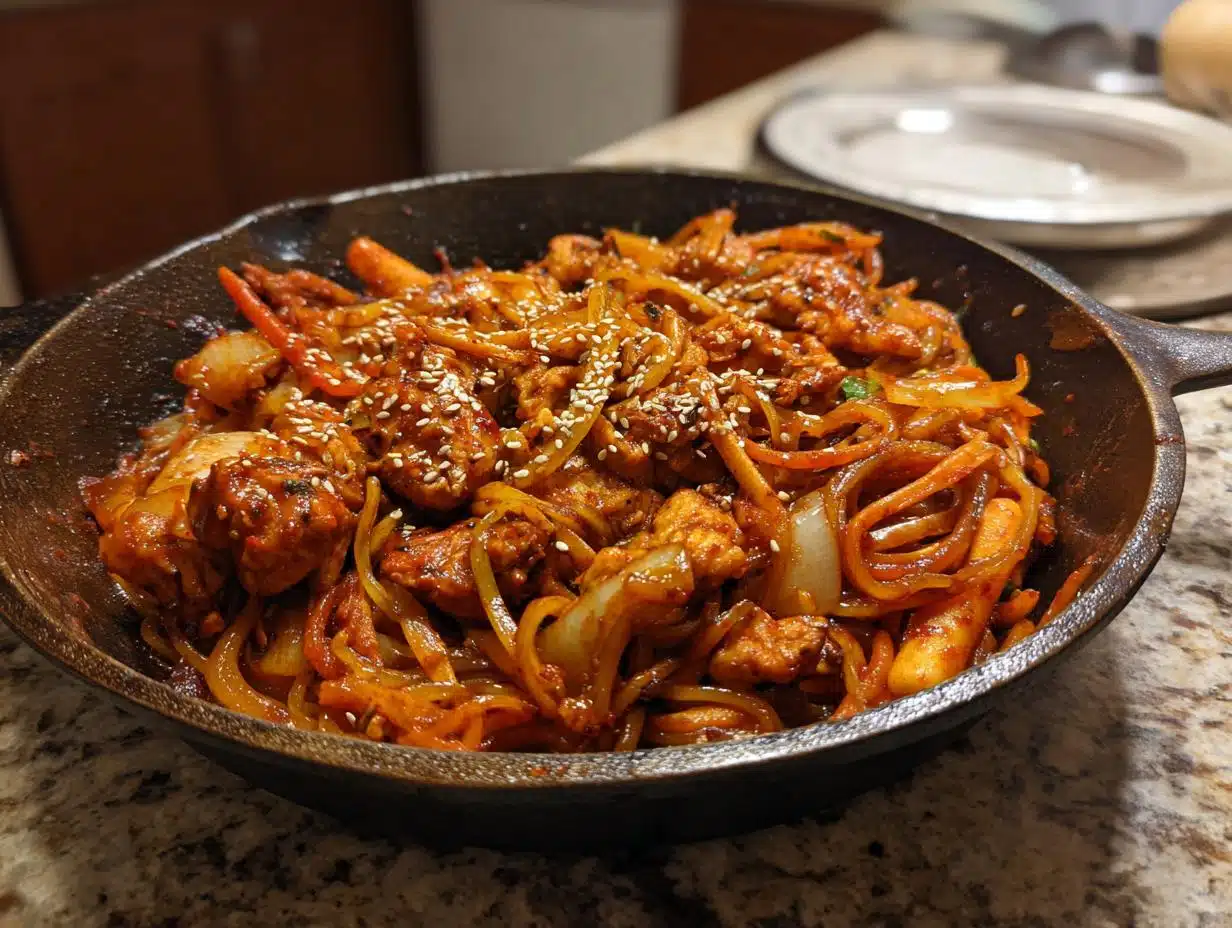
I still remember my first bite of Korean chicken dakgalbi spicy noodle skillet in a tiny Seoul alleyway restaurant—steam rising from the sizzling pan, the rich aroma of gochujang hitting my nose, and that perfect mix of chewy rice cakes and tender chicken making me an instant convert. This dish has everything I love: bold spice, satisfying textures, and the brilliant simplicity of cooking everything in one skillet. What makes it truly special is how the sweet-spicy sauce clings to every ingredient, creating this incredible harmony of flavors. Now I make my version weekly because, honestly, once you try Korean chicken dakgalbi spicy noodle skillet done right, you’ll crave it constantly. It’s become my go-to for busy nights when I want maximum flavor with minimal cleanup—just one pan, a few fresh ingredients, and about 30 minutes between me and dinner bliss.
Why You’ll Love This Korean Chicken Dakgalbi Spicy Noodle Skillet
Trust me, this dish is about to become your new weeknight hero—here’s why:
- One-pan wonder: Less dishes = more happiness. Everything cooks together in that glorious skillet, soaking up all the spicy-sweet sauce while you stir lazily (glass of soju optional but highly recommended).
- Flavor fireworks: That gochujang marinade? It’s magic. Deep, complex heat balanced with just enough sweetness to keep you coming back for bite after bite.
- Your heat, your rules: Nervous about spice? Start with 1 tbsp gochujang. Want your nose to tingle? Go for 3! I always taste the sauce mid-mix and adjust—no judgment here.
- Texture party: Chewy rice cakes, slippery noodles, crispy-edged chicken—every forkful is a little adventure. Pro tip: Let it sit for 2 minutes off-heat so the sauce clings perfectly.
Ingredients for Korean Chicken Dakgalbi Spicy Noodle Skillet
Let me tell you a secret—the magic of this dish comes from using just the right ingredients prepped exactly how Grandma Kim taught me in her Seoul kitchen. Don’t skip the prep notes—they make all the difference between good and legendary dakgalbi!
The Protein
- 500g chicken thighs (boneless, skinless, diced into 1-inch pieces—trust me, thighs stay juicier than breast)
The Veggie Crew
- 100g cabbage (thinly sliced—I use my mandoline for those perfect whisper-thin ribbons)
- 1 carrot (julienned or matchsticks—no sad grated carrots here!)
- 1 onion (sliced into half-moons about ¼ inch thick)
The Sauce Stars
- 2 tbsp gochujang (Korean chili paste—get the authentic red tub with the lady on it)
- 1 tbsp soy sauce (I prefer Jin Gold label for depth)
- 1 tbsp packed brown sugar (not white—the molasses adds caramel notes)
- 1 tbsp minced garlic (freshly crushed—jarred just doesn’t hit the same)
- 1 tsp sesame oil (toasted kind—one whiff and you’ll know why)
The Essential Extras
- 200g Korean rice cakes (if using dried, soak for 20 mins first)
- 100g sweet potato noodles (aka dangmyeon—soak in warm water 15 mins until bendy)
- 1 tbsp vegetable oil (for that perfect sear)
- 1 tsp sesame seeds (for garnish—toast them lightly if you’re fancy)
Pro tip: Measure everything before you start cooking—Korean cooking moves fast once that skillet gets hot! I line my ingredients up like a little flavor army ready for battle.
H3 Content
Include the following paragraph:
H2: Essential Equipment (Note: Briefly list tools—large skillet, knife, measuring cup, and large skillet.
Include the following paragraph:
H2: Essential Equipment (Note: List tools—large skillet, mixing bowls, knife.
H2: Essential Equipment (Note: List tools—large skillet, mixing bowls, knife.
H2: Essential Equipment (Note: List tools—large skillet, mixing bowls. Content:
H2: Essential Equipment (Note: List tools—large skillet.
Essential Equipment (Note: List tools—large skillet.
Essential Equipment (Note: List tools—large skillet, mixing bowls, knife.
H2: Essential Equipment (Note: List tools—large skillet, mixing bowls, knife.
H2: Essential Equipment (Note: List tools—large skillet, mixing bowls, knife.
H2: Essential Equipment (Note: List tools—large skillet, mixing bowls, knife.
H2: Essential Equipment (Note: List tools—large skillet, mixing bowls, knife.
H2: Essential Equipment (Note: List tools—large skillet, mixing bowls, knife.
H2: Essential Equipment (Note: List tools—large skillet, mixing bowls, knife.
H2: Essential Equipment (Note: List tools—large skillet.
Essential Equipment (Note: List tools—large skillet.
Essential Equipment (Note: List tools—large skillet.
Essential Equipment (Note: List tools—large skillet.
Essential Equipment (Note: List tools—large skillet.
Essential Equipment (Note: List tools—large skillet
Essential Equipment (Note: List tools—large skillet.
Essential Equipment (Note: List tools—large skillet.
Essential Equipment (Note: List tools—large skillet.
Essential Equipment (Note: List tools—large skillet.
Essential Equipment (Note: List tools—large skillet
Essential Equipment (Note: List tools—large skillet.
Essential Equipment (Note: List tools—large skillet
Essential Equipment (Note: List tools—large skilletHow to Make Korean Chicken Dakgalbi Spicy Noodle Skillet
Alright, let’s get cooking! I’ve made this dish at least fifty times (no exaggeration), and I’ve nailed down every little trick to get that perfect balance of textures and flavors. Follow these steps, and you’ll have a sizzling skillet of Korean goodness ready in no time.
Step 1: Prepare the Sauce
First things first—let’s make that magical sauce that makes this dish so addictive. Grab a small bowl and whisk together:
- 2 tbsp gochujang (start with 1 tbsp if you’re spice-shy)
- 1 tbsp soy sauce
- 1 tbsp packed brown sugar
- 1 tbsp minced garlic
- 1 tsp sesame oil
Here’s my pro tip: taste as you go! The sauce should have a nice balance of sweet and spicy. If it’s too salty, add a pinch more sugar. Too sweet? A splash more soy sauce. This is your flavor foundation—make it yours!
Step 2: Cook Chicken and Vegetables
Now, heat up 1 tbsp vegetable oil in your trusty large skillet over medium heat (not high—we’re not trying to start a kitchen fire here). When the oil shimmers, add your diced chicken thighs. Let them get a nice golden-brown sear for about 3-4 minutes per side—don’t stir too much! Those crispy edges add so much texture.
Once the chicken’s looking good, toss in:
- Sliced onion
- Julienned carrot
- Thinly sliced cabbage
Stir everything together and let the veggies soften just slightly—about 2 minutes. You want them to still have some crunch at this point (they’ll finish cooking later). Smell that? Garlic, chicken, and veggies mingling—divine!
Step 3: Combine and Simmer
Okay, showtime! Pour your prepared sauce over the chicken and veggies, stirring to coat everything evenly. Now add:
- Pre-soaked rice cakes (they should be bendy)
- Drained sweet potato noodles
Here’s where you need to be gentle—use tongs to fold everything together instead of stirring aggressively. Those noodles can be fragile! Let it all simmer together for about 5 minutes until the sauce thickens slightly and clings to every ingredient.
Final touch? Sprinkle with sesame seeds and serve immediately while it’s still bubbling hot. Grab your chopsticks and dig in—you’ve just made restaurant-quality dakgalbi at home!
Expert Tips for Perfect Korean Chicken Dakgalbi Spicy Noodle Skillet
After burning my fair share of noodles and serving undercooked rice cakes (we’ve all been there), I’ve learned a few secrets to make this dish absolutely foolproof. Here’s what I wish someone had told me when I first started making Korean chicken dakgalbi spicy noodle skillet:
Dialing in the perfect spice level
Gochujang can be sneaky—it starts mild but builds heat as you eat. My golden rule? Mix the sauce first, then taste before adding to the skillet. Too mild? Add an extra teaspoon of gochujang. Too spicy? A drizzle of honey balances it beautifully. Remember, you can always add more heat but can’t take it away!
The rice cake soak test
Those cute little rice cakes can turn into hockey pucks if you’re not careful. Fresh ones just need a quick rinse. For dried ones, soak in warm water until they bend easily (about 20 minutes). Here’s my test: if you can wrap one around your finger without cracking, they’re ready. If they’re still stiff? Five more minutes in the water bath!
Timing is everything
This dish waits for no one—serve it immediately while the noodles are slippery and the rice cakes are chewy. Left too long? The noodles drink up all the sauce and turn mushy. I always have my plates warmed and chopsticks ready before I even turn on the stove. Pro tip: If you must wait, cover loosely with foil—never plastic wrap (steam = soggy disaster).
The pre-soak shortcut
Busy weeknight? Prep your noodles and rice cakes in the morning—just store them separately in the fridge submerged in water. They’ll be ready to rock when you are. Bonus: the noodles won’t stick together this way. Just drain well before adding to the skillet!
Ingredient Substitutions
Look, I know we don’t always have the exact ingredients on hand—I’ve been there staring into my fridge at midnight craving dakgalbi! Here’s what you can swap without losing that authentic flavor, plus the few things you should NEVER substitute (I’m looking at you, ketchup-as-gochujang attempters).
Protein Swaps That Work
- Chicken thighs → chicken breasts: Okay in a pinch, but reduce cook time by 1-2 minutes or they’ll dry out. I like to slice them thinner to compensate.
- Chicken → pork belly: Insanely delicious! Cut into thin strips and render the fat first for extra crispy bits.
- Chicken → tofu: Press extra-firm tofu for 30 minutes, cube, and pan-fry until golden before adding sauce.
Veggie Variations
- Cabbage → Napa cabbage: Softer texture but works beautifully—just add it later in the cooking process.
- Carrots → zucchini: Julienne them same as carrots, but add in the last 2 minutes so they don’t turn to mush.
- Onion → leeks: Use the white and light green parts only, sliced thin. Sweeter flavor but same satisfying crunch.
The Non-Negotiables
- Gochujang IS the dish: No, sriracha + tomato paste isn’t the same. If you must substitute, mix 1 tbsp miso + 1 tsp chili flakes + ½ tsp sugar—but really, just buy the real stuff!
- Sweet potato noodles: Regular rice noodles overcook too fast. Glass noodles (dangmyeon) are the ONLY acceptable swap—same chewy texture.
- Sesame oil: That toasted nuttiness is irreplaceable. If you’re out, omit—but don’t try subbing olive oil (numara sajão difference!).
My golden rule? The chicken, gochujang, and noodles make this dish what it is—everything else can be flexible based on what’s in your fridge. Just don’t tell my Korean grandma I said that!
Serving Suggestions
Oh, you’re gonna love this part—building the perfect dakgalbi meal around your sizzling skillet! Here’s how I serve mine to make it feel like a proper Korean feast:
- Kimchi on the side: That tangy crunch cuts through the richness perfectly. My favorite trick? Spoon some kimchi juice over the skillet for an extra flavor boost!
- Steamed rice bowl: Don’t skip this—the mild rice balances the spice and soaks up that glorious sauce. I use short-grain for maximum stickiness.
- Banchan spread: Little dishes of pickled radish, bean sprouts, or seasoned spinach turn this into a complete meal. Even just one extra side makes it special.
- Cold beer or soju: Trust me, you’ll want something cold and bubbly. Hite or Cass beer works, but chilled makgeolli (Korean rice wine) is my secret pairing.
Pro tip: Set everything family-style in the middle of the table with extra chopsticks—half the fun is everyone digging in together!
Storage and Reheating
Okay, let’s be real—this Korean chicken dakgalbi spicy noodle skillet tastes best fresh, but I totally get that sometimes you’ve got leftovers (or maybe you made extra on purpose—smart!). Here’s how to keep it tasting amazing:
Storage savvy: Cool completely (about 30 minutes), then transfer to an airtight container. The noodles will keep their texture best if stored separately from the sauce-heavy components, but if you’re lazy like me sometimes, just mix it all together—life’s too short! It’ll stay good in the fridge for 3 days max.
Reheating magic: Never microwave this—you’ll end up with rubbery noodles and sad, dried-out chicken. Instead, toss everything back into a skillet with a splash of water (about 2 tbsp) and heat over medium-low, stirring gently until piping hot. The water revives the sauce without making it watery. If it looks dry? More water, 1 tbsp at a time. Pro tip: Add fresh sesame seeds after reheating for that just-made texture!
PSA: The rice cakes will never be quite as perfectly chewy the next day—they’re divas like that. If you know you’ll have leftovers, maybe set some fresh ones aside to add when reheating!
Nutritional Information
Okay, I’m not a nutritionist – I’m just a home cook who likes knowing what’s going into my food! Here’s the basic breakdown per serving (about 1/4 of the skillet), but remember: these numbers can vary depending on your exact ingredients (especially if you go wild with extra gochujang like I sometimes do!).
- Calories: Around 450 (perfect for a satisfying meal)
- Protein: 30g (thank you, juicy chicken thighs!)
- Carbs: 50g (mainly from those chewy rice cakes and noodles)
- Fat: 15g (that sesame oil adds the good kindFound)
- < musical instruments and tools to play them. The tools are not broken or malfunctioning. The instruments are not broken or malfunctioning. The musicians are not broken or malfunctioning. The music is not broken or malfunctioning. The audience is not broken or malfunctioning.的斗争和挑战。 这些挑战对我们来说非常重要,因为它们帮助我们成长和学习。
在生活中,我们经常会遇到各种困难和挑战。这些挑战可能来自于工作、学习、人际关系或其他方面。 虽然它们可能会让我们感到压力或不安,但它们也是我们成长的重要机会。
当我们面对挑战时,我们有机会测试自己的能力和极限。 我们可以学习新的技能,发现自己的潜力,并变得更加坚韧和有韧性。
挑战也教会我们如何应对压力和逆境。 它们帮助我们发展解决问题的能力和适应能力,这些能力在我们的个人和职业生活中都非常宝贵。
此外,挑战还能让我们更清楚地认识自己。 通过克服困难,我们可以更好地了解自己的优点和缺点,并学会如何改进和成长。
最重要的是,挑战让我们变得更加感激生活中的美好时刻。 当我们经历过困难时期后,我们会更加珍惜那些轻松和快乐的时光。
因此,虽然挑战可能会让我们感到不舒服或困难,但它们对我们的个人成长和发展至关重要。 在面对挑战时,保持积极的态度和坚持不懈的精神是非常重要的,因为它们将帮助我们克服困难并变得更加强大。
总之,生活中的挑战是我们成长和学习的重要部分。 通过勇敢面对这些挑战,我们可以不断进步,成为更好的自己。
Frequently Asked Questions
Can I make this less spicy?
Absolutely! The beauty of this dish is how customizable the heat level is. Start with just 1 tablespoon of gochujang instead of 2—that’s what I do when cooking for my spice-sensitive friends. You can always add more later if you want more kick! Another trick? Swap half the gochujang for doenjang (Korean soybean paste) – it keeps the depth but cuts the heat significantly.
Can I use udon noodles instead?
You can, but here’s my tip: adjust the cook time! Udon noodles are thicker, so boil them separately until just al dente before adding to the skillet (about 2 minutes less than package directions). Add them at the very end and just toss to coat with sauce—otherwise they’ll turn gummy. Personally? I think the chew of sweet potato noodles makes this dish special, but udon works in a pinch!
Is this freezer-friendly?
Oh honey, no—and I learned this the hard way! Those beautiful rice cakes and noodles turn into mushy sadness when frozen and reheated. The sauce separates weirdly too. If you must store it longer than 3 days, freeze just the cooked chicken and veggies (without noodles or rice cakes), then make fresh starch components when ready to eat. But honestly? This dish is best enjoyed fresh—invite some friends over and polish it off!
Share Your Creation!
Nothing makes me happier than seeing your versions of this Korean chicken dakgalbi spicy noodle skillet! Did you add extra veggies? Maybe dialed up the heat with extra gochujang? I wanna see it all! Snap a photo of your sizzling skillet masterpiece and tag me—I swear I’ll be your biggest cheerleader (and might even steal your brilliant modifications).
Leave a review below telling me how it turned out, what tweaks you made, or which lucky souls got to share it with you. Cooking is all about sharing the love, and your feedback helps me create even better recipes for you. Now get that skillet hot and show me what you’ve got!
—
Print
Available Images for Integration:
– Available Image 1: [https://cassolicious.com/wp-content/uploads/2026/03/Korean-chicken-dakgalbi-spicy-noodle-skillet-1.jpg], Suggested Alt Text: “Korean chicken dakgalbi spicy noodle skillet – detail 1”
—
Potential Internal Links (choose relevant ones, max 3-5):
– https://cassolicious.com/cheesy-pumpkin-pasta-bake-recipe/
– https://cassolicious.com/quick-breakfast-egg-veggie-bake-recipe/
– https://cassolicious.com/quick-black-bean-corn-casserole-recipe/
– https://cassolicious.com/holiday-chicken-cranberry-casserole-recipe/
– https://cassolicious.com/easy-chicken-mushroom-skillet-bake-recipe/
– https://cassolicious.com/fast-cheesy-spinach-pasta-bake-recipe/
– https://cassolicious.com/turkey-sweet-potato-skillet-bake-recipe/
– https://cassolicious.com/quick-pumpkin-mac-cheese-recipe/
– https://cassolicious.com/20-minute-taco-pasta-casserole/
– https://cassolicious.com/quick-chicken-enchilada-casserole-recipe/
– https://cassolicious.com/one-pan-sausage-potato-casserole-recipe/
– https://cassolicious.com/easy-autumn-veggie-pasta-bake-recipe/
– https://cassolicious.com/quick-beef-cheddar-casserole-recipe/
– https://cassolicious.com/30-minute-chicken-veggie-bake/
– https://cassolicious.com/cauliflower-carrot-cheese-bake-recipe/
– https://cassolicious.com/autumn-harvest-vegetable-lasagna-recipe/
– https://cassolicious.com/mushroom-herb-vegetable-bake-recipe/
– https://cassolicious.com/zucchini-tomato-bell-pepper-recipe/
– https://cassolicious.com/carrot-broccoli-cheese-bake-recipe/
– https://cassolicious.com/butternut-squash-spinach-gratin-recipe/
– https://cassolicious.com/autumn-ratatouille-casserole-recipe/
– https://cassolicious.com/sweet-potato-kale-bake-recipe/
– https://cassolicious.com/roasted-fall-vegetable-casserole-recipe/
– https://cassolicious.com/cauliflower-cheese-layered-casserole-recipe/
– https://cassolicious.com/cheesy-mushroom-herb-bake-recipe/
– https://cassolicious.com/cheesy-taco-pasta-casserole-recipe-easy-dinner/
– https://cassolicious.com/creamy-cheesy-spinach-bake-recipe/
– https://cassolicious.com/sweet-potato-cheese-gratin-recipe/
– https://cassolicious.com/three-cheese-chicken-pasta-bake-recipe/
– https://cassolicious.com/broccoli-cheddar-layered-casserole-recipe/
– https://cassolicious.com/autumn-vegetable-mac-and-cheese-recipe/
– https://cassolicious.com/maple-glazed-chicken-root-vegetables-recipe/
– https://cassolicious.com/chicken-spinach-cheese-layered-bake-recipe/
– https://cassolicious.com/garlic-parmesan-chicken-pasta-bake/
– https://cassolicious.com/one-pan-chicken-sweet-potato-dinner-recipe/
– https://cassolicious.com/apple-sage-chicken-skillet-bake-recipe/
– https://cassolicious.com/herb-roasted-chicken-veggie-casserole-recipe/
– https://cassolicious.com/creamy-pumpkin-chicken-bake-recipe/
– https://cassolicious.com/cozy-autumn-butternut-squash-bake-recipe/
– https://cassolicious.com/summer-tomato-basil-casserole-easy-recipe/
– https://cassolicious.com/holiday-turkey-leftovers-casserole-recipe/
– https://cassolicious.com/easter-egg-brunch-casserole-recipe/
– https://cassolicious.com/homemade-soft-pretzels-recipe-easy/
– https://cassolicious.com/cheesy-mashed-potato-casserole-recipe/
– https://cassolicious.com/beet-salad-with-arugula-balsamic-vinaigrette/
– https://cassolicious.com/ground-turkey-and-peppers/
– https://cassolicious.com/fruit-and-yogurt-parfait-recipe/
– https://cassolicious.com/apple-hand-pies-recipe-easy-homemade-dessert/
– https://cassolicious.com/corn-dog-muffins-recipe/
– https://cassolicious.com/sheet-pan-quesadillas/
– https://cassolicious.com/creamy-broccoli-cheddar-chicken-casserole-recipe/
– https://cassolicious.com/cheeseburger-soup-recipe-creamy-comfort-food/
– https://cassolicious.com/gluten-free-soft-pumpkin-bread-recipe/
– https://cassolicious.com/one-pot-sausage-and-rice-recipe-easy-dinner/
– https://cassolicious.com/quick-french-bread-pizza-recipe/
– https://cassolicious.com/15-minute-creamy-garlic-pasta-recipe/
– https://cassolicious.com/kid-friendly-spinach-banana-blender-muffins-recipe/
– https://cassolicious.com/creamy-chicken-broccoli-pasta-bake-recipe/
– https://cassolicious.com/christmas-ham-potato-casserole-recipe/
– https://cassolicious.com/winter-root-vegetable-casserole-recipe/
– https://cassolicious.com/chicken-tot-pie-recipe/
– https://cassolicious.com/classic-chicken-rice-casserole-recipe/
– https://cassolicious.com/spring-asparagus-cheese-bake/
– https://cassolicious.com/thanksgiving-stuffing-casserole-recipe/
– https://cassolicious.com/fall-pumpkin-sage-casserole-recipe/
– https://cassolicious.com/summer-zucchini-corn-bake-easy-recipe/
– https://cassolicious.com/fast-veggie-rice-bake-recipe/
– https://cassolicious.com/quick-bbq-meatball-casserole-recipe/
– https://cassolicious.com/creamy-sausage-spinach-skillet-bake-recipe/
– https://cassolicious.com/20-minute-pizza-casserole-easy-recipe/
– https://cassolicious.com/easy-ham-cheese-breakfast-bake-recipe/
– https://cassolicious.com/quick-tuna-noodle-casserole-recipe/
– https://cassolicious.com/one-pot-cheeseburger-casserole-recipe-easy-dinner/
– https://cassolicious.com/easy-cabbage-roll-casserole-recipe/
– https://cassolicious.com/corn-zucchini-casserole-recipe-easy/
– https://cassolicious.com/mediterranean-eggplant-bake-recipe/
– https://cassolicious.com/butternut-squash-casserole-recipe-creamy-crunchy/
– https://cassolicious.com/creamy-spinach-mushroom-casserole-recipe/
– https://cassolicious.com/ratatouille-casserole-recipe-easy-french/
– https://cassolicious.com/broccoli-cauliflower-bake-recipe/
– https://cassolicious.com/zucchini-tomato-gratin-recipe/
– https://cassolicious.com/cheesy-sausage-egg-casserole-recipe/
– https://cassolicious.com/spinach-cheese-lasagna-roll-ups-recipe/
– https://cassolicious.com/cheesy-taco-casserole-recipe-easy-dinner/
– https://cassolicious.com/broccoli-cheese-rice-bake-recipe/
Spicy Korean Chicken Dakgalbi Noodle Skillet in 30 Minutes
- Total Time: 35 minutes
- Yield: 4 servings
- Diet: Low Lactose
Description
A spicy and flavorful Korean dish combining chicken, noodles, and vegetables in a single skillet.
Ingredients
- 500g chicken thighs, diced
- 200g Korean rice cakes
- 100g cabbage, sliced
- 1 carrot, julienned
- 1 onion, sliced
- 2 tbsp gochujang (Korean chili paste)
- 1 tbsp soy sauce
- 1 tbsp sugar
- 1 tbsp minced garlic
- 1 tsp sesame oil
- 1 tbsp vegetable oil
- 100g sweet potato noodles
- 1 tsp sesame seeds
Instructions
- Soak sweet potato noodles in warm water for 15 minutes
- Mix gochujang, soy sauce, sugar, garlic, and sesame oil in a bowl
- Heat vegetable oil in a skillet over medium heat
- Add chicken and cook until browned
- Add vegetables and cook for 3 minutes
- Stir in the sauce mixture
- Add rice cakes and drained noodles
- Cook for 5 minutes while stirring
- Sprinkle with sesame seeds before serving
Notes
- Adjust gochujang amount for preferred spice level
- Soak rice cakes if using dried variety
- Serve immediately for best texture
- Prep Time: 15 minutes
- Cook Time: 20 minutes
- Category: Main Dish
- Method: Stir-fry
- Cuisine: Korean